Hi there πŸ‘‹πŸΌπŸ‘©πŸ»β€πŸ’»

Mengqi Shi

Master Student in HCI, University of Washington

I am currently pursuing a Master of Science in Technology Innovation (Connected Devices) at the University of Washington, Seattle. I received my Bachelor's degree in Communication with minors in Informatics and Data Science from the University of Washington, where I was a three-time Annual Dean's List recipient.

Currently, I am a Research Intern at the AI4SG Lab at the National University of Singapore (NUS), supervised by Dr. Yi-Chieh (EJ) Lee and Tianqi (Holly) Song. I also serve as a Research Assistant at the ACE Lab (University of Washington), advised by Dr. Jacob O. Wobbrock, Dr. James A. Fogarty, and Mingyuan Zhong. Previously, I have research experiences at the Department of Human Centered Design and Engineering (HCDE), and gained industry experience as a User Research Intern at Xiaomi Inc.

My research interests include human-computer interaction related to accessibility and responsible AI. I am passionate about combining empirical studies of human behavior with the design of inclusive, human-centered technologies to lower barriers to participation and address overlooked social and emotional needs. Additionally, I am interested in how digital platforms and social media influence collective meaning-making and public perception.

I enjoy engaging in interdisciplinary collaborations that bridge the gap between social computing and physical prototyping. Feel free to email me if you are interested in collaborating, discussing research ideas, or just making friends! :)

Research Interests

The core of my work centers on three research directions. Click each card for an expanded page with project context and related papers.

Publications

Selected publications and manuscripts in progress.

Paper thumbnail

[IJHCS - FULL PAPER]

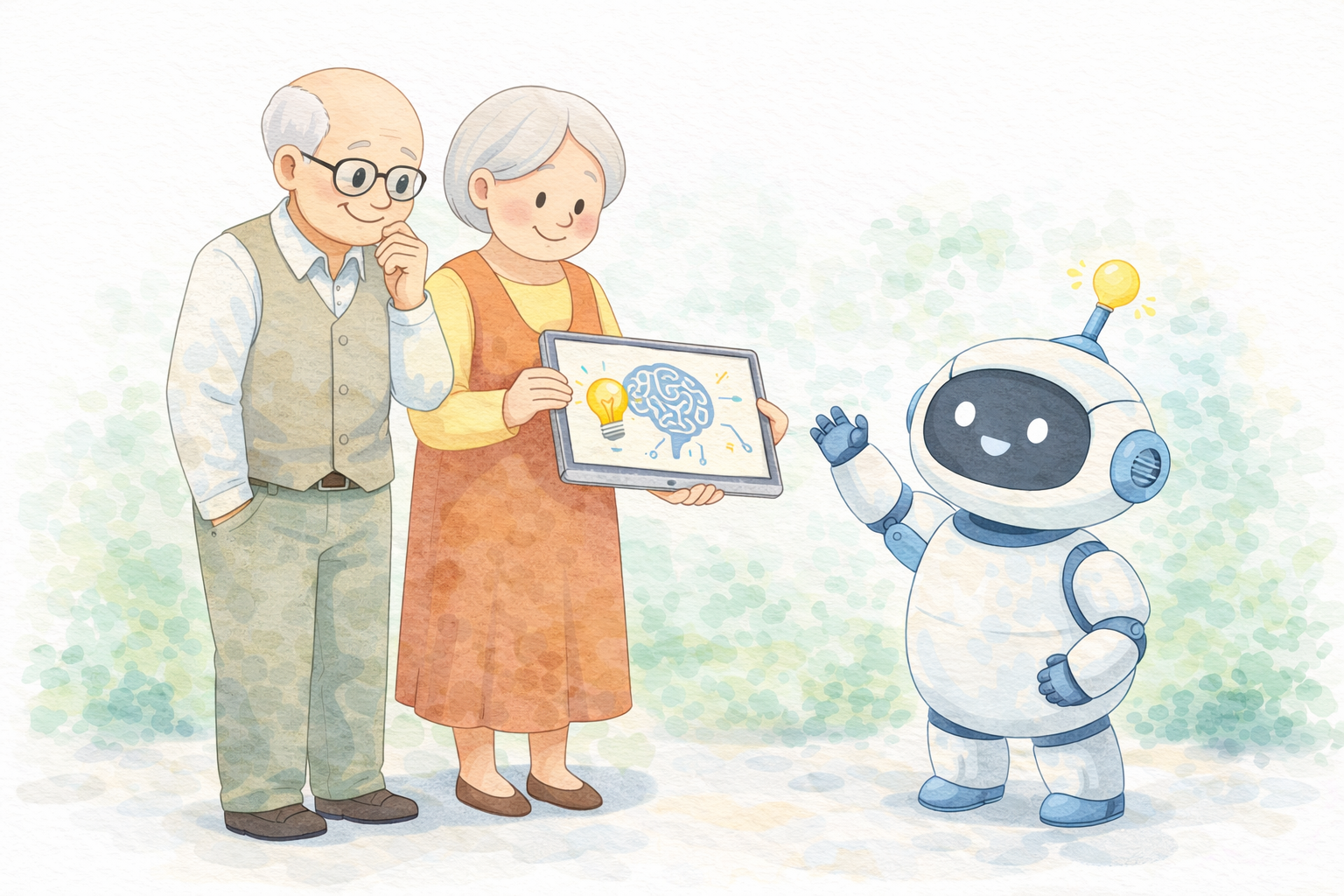
Learn AI with AI: Designing Conversational Agents to Support Older Adults in Learning about AI

Eugene Tang KangJie, Tianqi Song, Mengqi Shi, Yi-Chieh Lee.

TL;DR: This work examines how conversational agents can support older adults in learning about AI. Across interviews and a comparative study, the findings suggest that peer-like agents can better foster engagement and support confidence, pointing to design opportunities for AI literacy tools tailored to older adults.
  • AI Literacy
  • Older Adults
  • Conversational AI
  • Learning Design
Paper thumbnail

[UIST 2026 - POSTER]

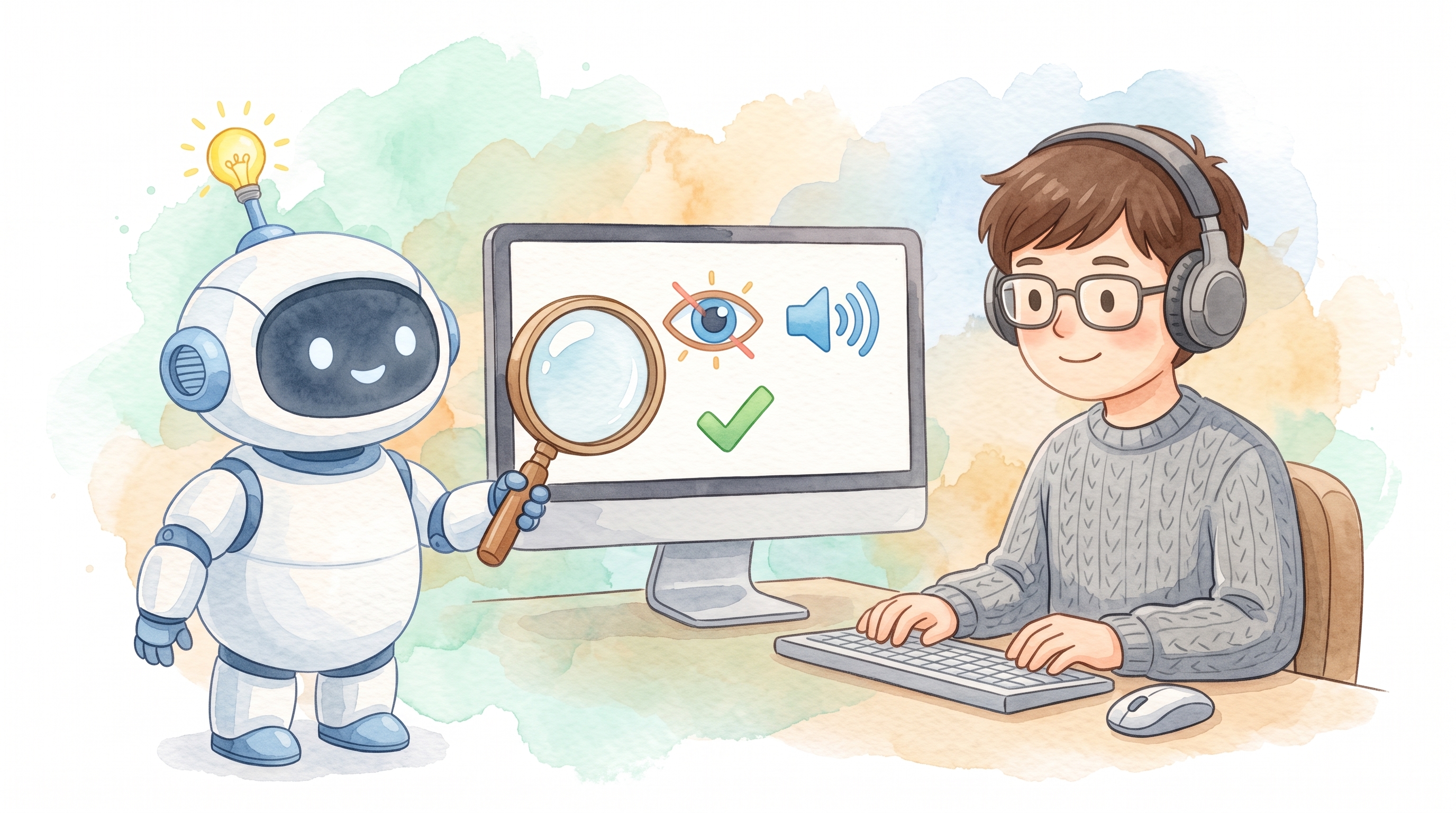
Targeted Interaction Agents for Web Accessibility Evaluation

Mingyuan Zhong, Ajit Mallavarapu, Mengqi Shi, Davin Win Kyi, James Fogarty, Jacob O. Wobbrock.

TL;DR: Large language models (LLMs) show promise for web accessibility evaluation, but they still produce many false positives and false negatives on W3C's ACT rules, mainly due to missing evidence, weak criterion support, and ungrounded semantic judgments. We propose interactive tools that gather evidence like focus and error messages, paired with atomic rubrics that guide LLM agents on WCAG criteria. This approach achieves much higher recall (99.1% vs. 68.7%) and precision (91.2% vs. 68.1%) than the strongest baseline.

  • Accessibility Systems
  • Intelligent agents
Paper thumbnail

[DIS 2026 - FULL PAPER]

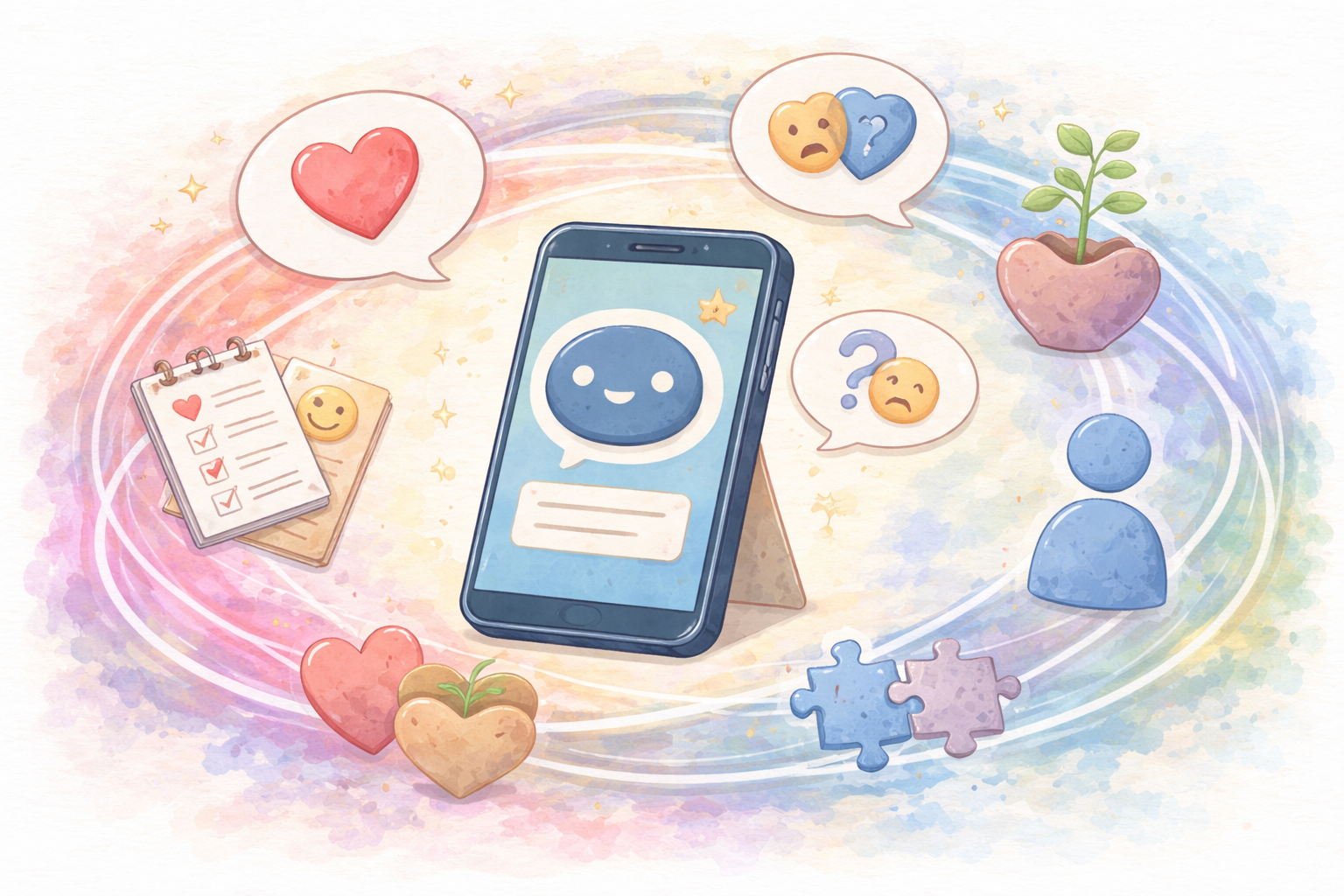
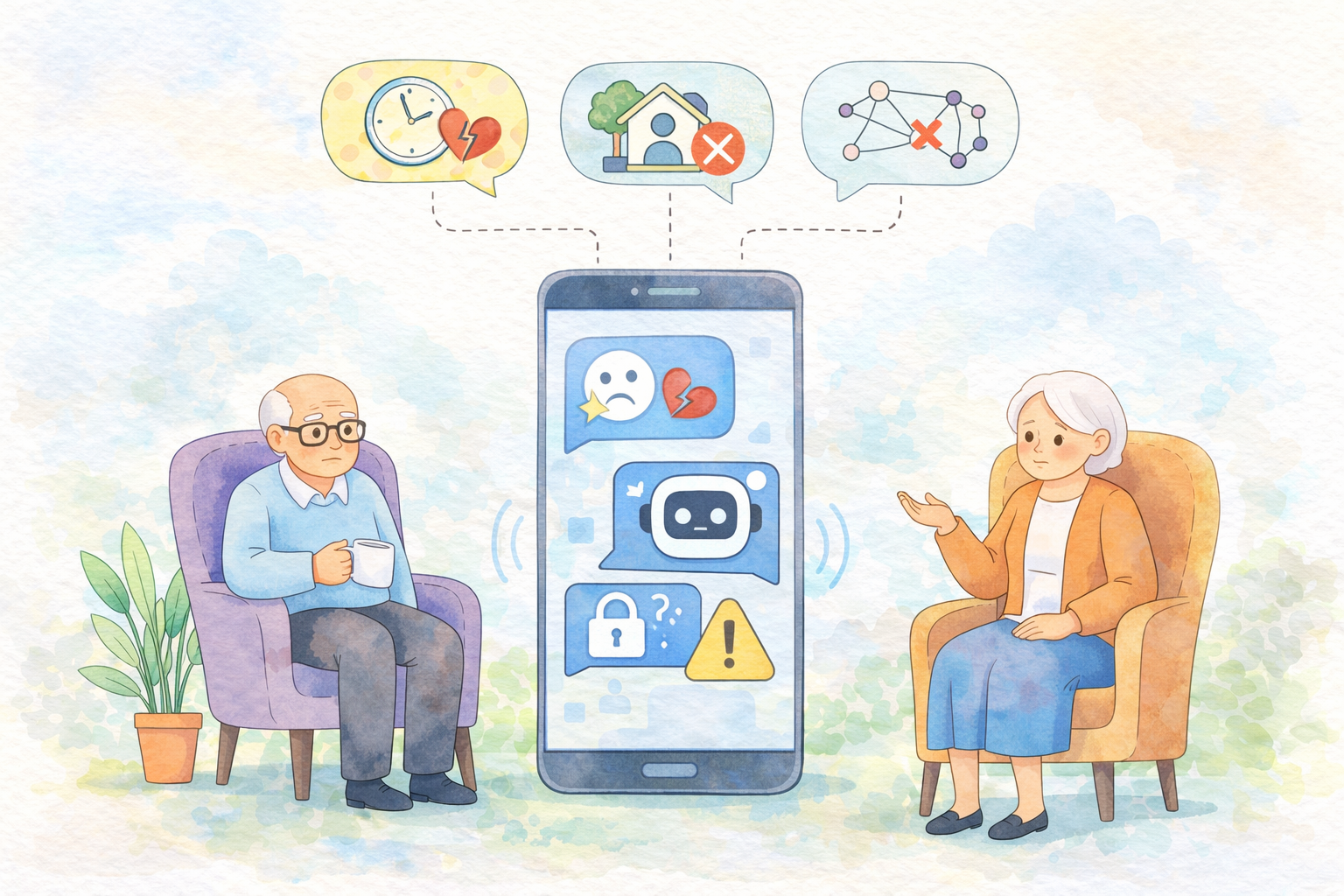
Designing with Tensions: Older Adults' Emotional Support-Seeking Under System-Level Constraints in Conversational AI

Mengqi Shi, Tianqi Song, Zicheng Zhu, Yi-Chieh Lee.

TL;DR: Interviews with 18 older adults show that they often turn to conversational AI for emotional support when human support feels inaccessible, but safety interventions such as redirection or interruption can feel abrupt, undermine emotional pacing, and reduce users' sense of agency. The work argues for emotionally supportive AI systems whose safety mechanisms better align with older adults' social contexts and lived experiences.

  • Qualitative Methods
  • Conversational AI
  • Responsible AI
  • Older Adults
Paper thumbnail

[CHI 2026 - POSTER]

When Humans Don't Fseel Like an Option: Contextual Factors That Shape When Older Adults Turn to Conversational AI for Emotional Support

Mengqi Shi, Tianqi Song, Zicheng Zhu, Yi-Chieh Lee.

TL;DR: Older adults sometimes prefer AI over friends/family for emotional support, not out of general preference, but in specific moments: when loved ones are unavailable, to avoid feeling like a burden, or to protect their dignity. Interviews with 18 older adults reveal how concerns around independence and self-image drive these situational choices, with implications for designing more context-aware AI companions.

  • Qualitative Methods
  • Responsible AI
  • Thematic Analysis
  • Human-AI Interaction
Paper thumbnail

[CHI 2026 WORKSHOP - POSITION PAPER]

Relational Co-Adaptation in Emotionally Supportive AI: Tensions in Authentic Emotional Interaction

Mengqi Shi.

TL;DR: This position paper frames emotionally supportive AI as a relational, co-adaptive process rather than a one-sided interaction, highlighting tensions around authenticity, emotional reciprocity, and how users' expectations evolve over time.

  • Human-AI Interaction
  • Responsible AI
  • Conversational AI
  • Position Paper
Paper thumbnail placeholder

[ICER 2023 - FULL PAPER]

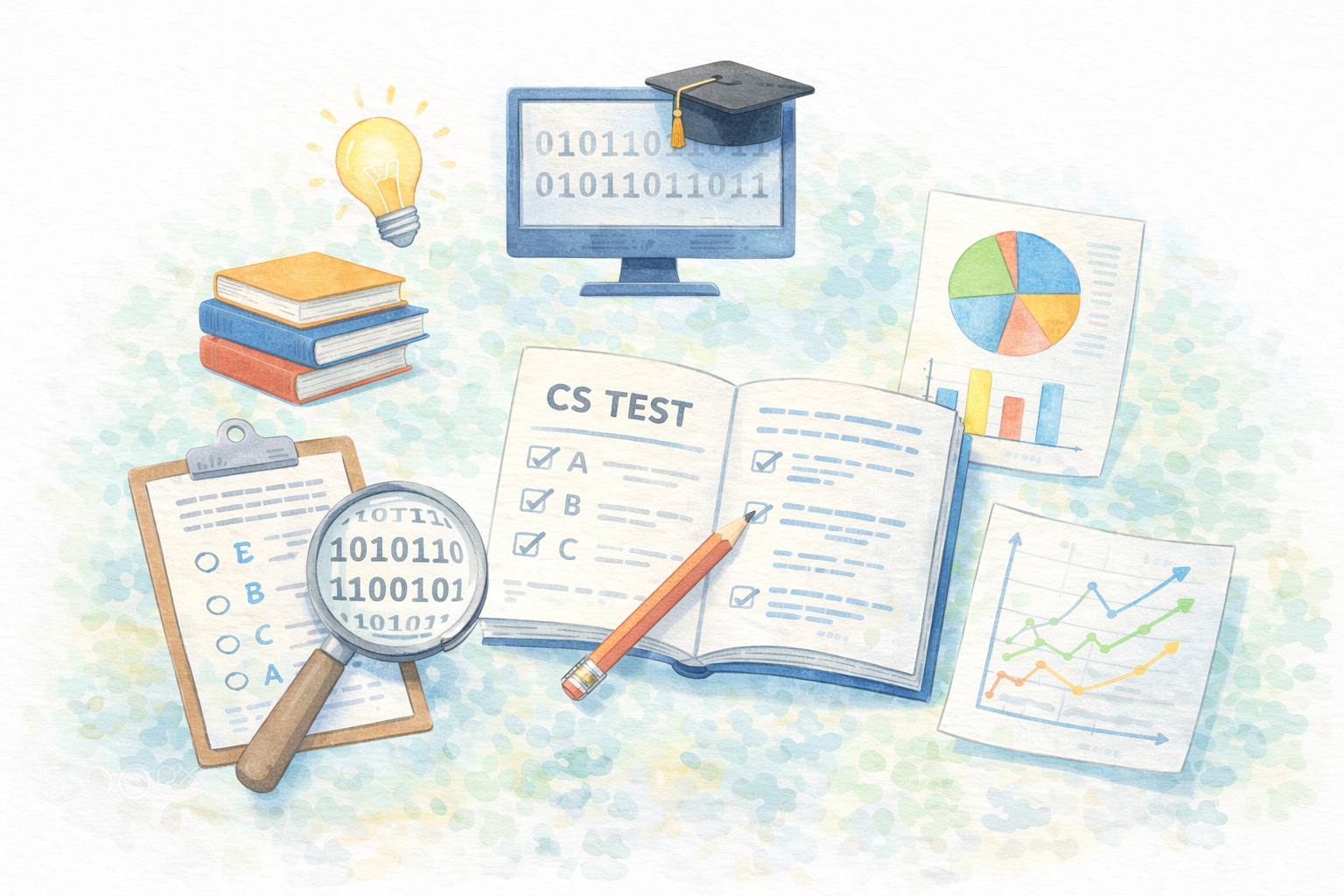
Taking Stock of Concept Inventories in Computing Education: A Systematic Literature Review

Murtaza Ali, Sourojit Ghosh, Prerna Rao, Raveena Dhegaskar, Sophia Jawort, Alix Medler, Mengqi Shi, Sayamindu Dasgupta.

TL;DR: This work synthesizes the concept inventory literature in computing education through a review of 65 papers and large-scale dataset analysis, surfacing major trends, gaps, and methodological patterns in how conceptual understanding is assessed.

  • Literature Review
  • Data Visualization
  • Computing Education
  • Research Synthesis

Research Experience

Selected research roles and projects.

AI4SG Lab

National University of Singapore

Advisors Yi-Chieh (EJ) Lee, Tianqi (Holly) Song

Designing AI Handoffs from Emotional Support to Outside Help Lead Researcher

04/2026 - Present

  • Studied how conversational AI handoff strategies affect transition perception and post-transition help-seeking intention, operationalizing Theory of Planned Behavior constructs into distinct conversational transition designs.
  • Conducted a 180-participant between-subjects study with multi-turn AI interaction, psychometric measures, behavioral-choice proxies, and qualitative thematic analysis, yielding design implications for more actionable transitions toward human and professional support.

Emotional Safety Boundaries and Controls in Older Adults' Use of AI Companions Lead Researcher

04/2025 - 04/2026

  • Initiated and led an independent qualitative study on how older adults establish emotional safety boundaries when using conversational AI for companionship, partnering with a community organization to recruit 18 adults aged 60+ for semi-structured interviews.
  • Conducted the full qualitative research pipeline, including study design, interviewing, coding, and thematic analysis, to identify concerns around emotional reliance, self-disclosure, and agency in human-AI companionship.
  • Translated findings into design implications for emotionally safer, context-aware, and user-controllable AI companions, resulting in a poster accepted at CHI EA '26 and a full paper accepted at DIS '26.

Peer Conversational Agents for Older Adults' AI Literacy Research Assistant

04/2025 - 08/2026

  • Co-conducted semi-structured interviews with adults aged 50+ to investigate AI literacy needs, learning preferences, and perceptions of peer-like conversational agents as learning support.
  • Contributed to rigorous inductive qualitative analysis through transcript verification, double-coding, reconciliation, and affinity diagramming, identifying key affective barriers including low confidence and disengagement.
  • Helped derive four design guidelines for peer conversational agents supporting older adults' AI literacy; manuscript under review at IJHCS as third author.

ACE Lab

University of Washington

Advisors Jacob O. Wobbrock, James A. Fogarty, Mingyuan Zhong

LLM- and Agent-Driven Accessibility Auditing and Repair for Web and Mobile Interfaces Research Assistant

04/2025 - Present

  • Develop and evaluate LLM- and agent-driven approaches for detecting, assessing, and repairing accessibility issues in web and mobile interfaces, grounded in WCAG 2.2.
  • Build a dataset of web accessibility issues for system development and evaluation, including creating approximately 80% of the mock-up webpages used to represent diverse accessibility barriers.
  • Contribute to system implementation and preliminary validation of accessibility auditing workflows, resulting in a poster accepted at UIST '26.

PlayBridge: Making Educational Games More Accessible for Children with Motor Impairments Research Assistant

04/2025 - Present

  • Investigate accessibility barriers in educational gameplay for children with motor impairments, focusing on input demands, interaction constraints, and participation challenges in play-based learning.
  • Design, prototype, and iteratively refine physical and interactive systems that support more accessible and engaging gameplay experiences for children with diverse motor abilities.
  • Translate accessibility needs into inclusive design directions for child-centered assistive gaming technologies through collaborative prototyping and evaluation.

Department of Human Centered Design & Engineering

University of Washington

Advisors Sayamindu Dasgupta, Murtaza Ali

Concept Inventories in Computing Education Research Assistant

01/2023 - 09/2023

  • Conducted a structured literature review of concept inventory research in computing education, screening over 200 papers, extracting thousands of data points, and curating an analytic corpus of more than 100 studies across more than 10 dimensions.
  • Synthesized and analyzed the literature to characterize methodological patterns, research trends, and gaps in the field; developed publication-quality visualizations in Matplotlib and Seaborn to support comparative analysis and evidence-driven interpretation.
  • Co-authored a paper published at ICER '23, contributing to scholarly understanding of assessment design and validation practices in computing education research.

Education

Academic training and degree milestones.

09/2025 - 03/2027

M.S. in Technology Innovation - Connected Devices

University of Washington, Seattle, WA

  • Core coursework includes programming for digital and physical interfaces, managing data and signal processing, fabrication, prototyping, and user research.
  • Training bridges hardware/software systems with human-centered design and evaluation.
  • Expected graduation: March 2027.

09/2021 - 06/2025

B.A. in Communication

University of Washington, Seattle, WA

  • Minors in Informatics and Data Science; GPA: 3.83/4.0.
  • Three-time Annual Dean's List recipient across all quarters.
  • Additional recognition includes an Undergraduate Research Symposium poster, the Deborah Kaplan Award, and the Google UX Design Certificate.

Teaching & Academic Services

Selected teaching and academic service activities.

Teaching

  • INFO 201: Foundational Skills for Data Science Teaching Assistant 2024-2025

Academic Services

  • DIS 2026 Work in Progress Reviewer 2026

Misc

A small corner for side projects and everyday interests.